
The time I worked in Google office in New Taipei City.
One and a half years ago, I had the chance to join the Google Apprenticeship Program as a Program Manager (PgM) Associate, working on Pixel-related projects. It has been an incredible journey — being surrounded by talented people from around the world, learning every day, and experiencing one of the best working environments imaginable. It truly feels like a dream come true.
Many people think being a Program Manager simply means understanding terms and workflows like Agile, Scrum, Waterfall (top-down management), horizon management, Six Sigma, or SMART goals. I used to think so too. But once I started, I quickly realized that a PgM’s day-to-day work is much more dynamic and complex than that. (By the way, if you’re interested in becoming a Program Manager or just want to learn more about what PgMs actually do, I highly recommend taking the Google Project Management Professional course — it taught me a lot, though it does take time.)
The first challenge I faced was the sheer amount of projects and information to manage. Each project or domain had its own terminology and specific knowledge to learn. Learning how to filter information effectively, manage my time, and prioritize tasks became essential skills in this role.

What skills do you need to become a Program Manager?
As I grew more confident in the role, I began to understand that being an effective Program Manager isn’t just about mastering tools or frameworks — it’s about people, communication, and clarity. The most valuable skill I’ve developed is the ability to connect the dots between different teams and ensure everyone is aligned toward the same goal.
Here are some of the key skills that helped me the most:
- Communication: The ability to translate complex technical details into clear, actionable plans that everyone understands.
- Organization: Keeping track of multiple projects, priorities, and dependencies without losing sight of deadlines.
- Empathy: Understanding what each team needs — engineers, designers, or business stakeholders — and creating an environment where everyone feels supported.
- Adaptability: No two projects are the same. Being flexible and adjusting your approach when things change is crucial.
- Curiosity: Asking questions, even when you don’t have all the answers, helps you learn faster and build stronger collaboration.
What is NPI?
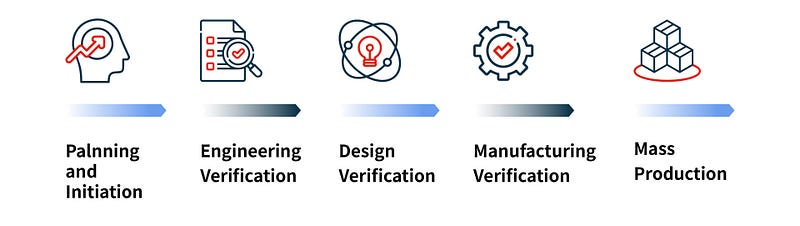
When I first heard the term NPI (New Product Introduction), I had no idea how complex and fascinating it would be. NPI is the process that takes a product from an initial idea all the way to launch — from concept, design, and development, to testing and mass production. As a PgM Associate, being part of the NPI process gave me a front-row seat to how different functions at Google collaborate to bring a product like Pixel to life.
Here’s what I learned through the NPI experience:
- Cross-functional collaboration is everything. Engineers, designers, supply chain, and marketing teams all need to stay aligned — and PgMs are often the glue that keeps that coordination running smoothly.
- Attention to detail matters. Even small changes in requirements, testing, or timing can have big downstream impacts.
- Problem-solving under pressure is part of the job. There are always unexpected challenges — and the key is to stay calm, communicate clearly, and focus on solutions.
- Launch readiness means thinking ahead. NPI taught me how to anticipate risks, prepare contingency plans, and help ensure the product launches on time and with quality.
What is Proto/EVT/PVT/PVT?
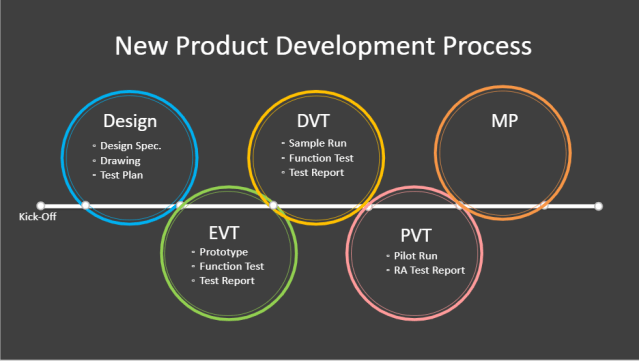
During the NPI process, there are three key build stages that every hardware product goes through before mass production — EVT, DVT, and PVT:
- EVT (Engineering Validation Test): The first build stage, focused on testing the core design and engineering concepts. It’s about answering the question, “Does the product work as intended?”
- DVT (Design Validation Test): Once the engineering design is stable, DVT ensures the product meets design requirements, usability standards, and quality goals. Here, the focus is on refining rather than inventing.
- PVT (Production Validation Test): The final stage before mass production. This is where the full production line is tested to make sure everything — assembly, materials, and testing — is ready to scale reliably.
Reflections and Gratitude
Looking back, my time as a PgM Associate has been more than just an apprenticeship — it’s been a journey of personal and professional growth. I’ve learned how much impact clear communication and teamwork can have, and how small improvements every day can lead to something extraordinary.
Here are a few key lessons that will stay with me:
- Learning never stops. There’s always a new process, a new challenge, or a new perspective to discover — and that’s what keeps the work exciting.
- People matter most. Building trust and empathy with teammates creates a culture where innovation can thrive.
- Progress over perfection. It’s better to move forward, learn, and adjust than to wait for everything to be flawless.
- Gratitude fuels growth. Being surrounded by mentors and teammates who believe in you makes all the difference.
As I move forward, I’ll carry these lessons into every new opportunity. My time at Google has taught me not just how to manage programs, but how to grow as a person.

Leave a Reply to user Cancel reply